Camping Weather Checklist: Read the Forecast Before You Book a Campsite
Plan a U.S. camping trip around daytime highs, overnight lows, wind, rain, alerts, and safe lightning shelter. Includes a practical forecast checklist for campgrounds and trailheads.
Weather changes by place and time. This guide is general information, not a safety rating, medical advice, or an official alert. Follow local authorities and the linked agencies for current conditions.
Use the forecast for the campsite, not the nearest big city
A campground can sit at a different elevation or exposure from the town shown in a phone app. A mountain campsite may be colder and windier; a coastal site may have fog or changing winds; a desert site may cool quickly after sunset. Check the National Weather Service forecast for the campground or the nearest relevant point and read the time periods carefully. If the site is remote, examine the surrounding terrain and ask the park or campground operator which forecast area best represents the location.
Check both the day you arrive and the overnight periods. A pleasant afternoon high does not tell you how cold the campsite may feel before dawn. Look at precipitation, wind, and active alerts alongside temperature. If the forecast covers a broad area, leave room for local differences and recheck before departure. A map pin or ZIP code forecast is an approximation, not a reading from your tent or a guarantee about a particular campsite.
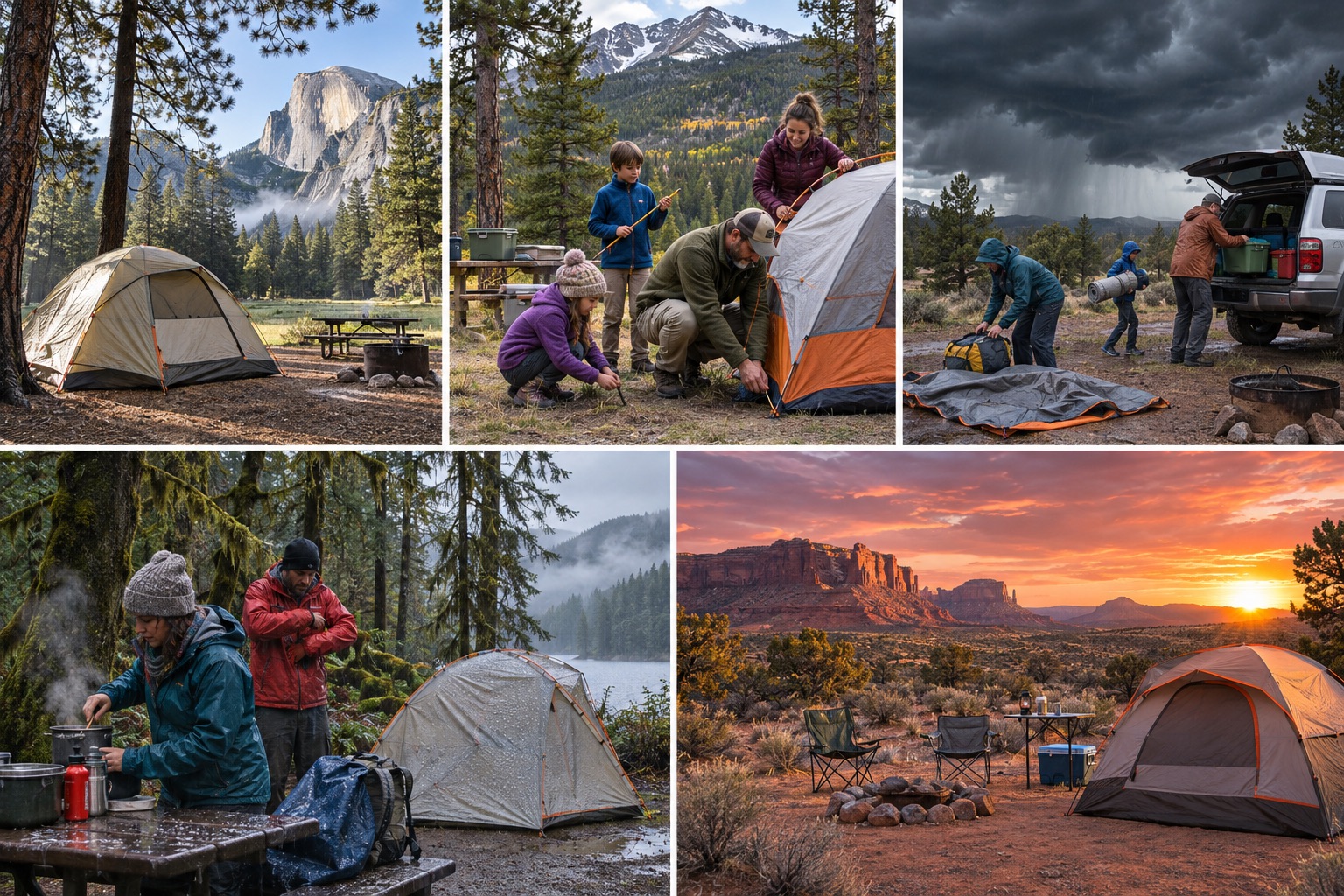
Plan for overnight lows, wet clothing, and wind
Campers spend time outdoors after sunset and may be less active than during a hike, so the overnight low and wind deserve attention. Bring sleep and clothing equipment appropriate to the expected conditions and your own experience. Wet clothing, rain, and wind can make a night uncomfortable even when the daytime high looked mild. Check the forecast for the full stay, not only the drive in, and learn whether the campground has heated facilities or a way to leave if weather deteriorates.
For extreme cold, follow NWS alerts and cold-weather guidance; postpone or choose a different site if your equipment or experience is not appropriate. Keep dry layers accessible and follow the equipment manufacturer's instructions. Do not use fuel-burning heaters or stoves in an enclosed tent or vehicle; carbon monoxide can be deadly. Use only equipment as designed and follow the campground's fire and fuel rules. A forecast cannot tell you whether your sleeping setup is adequate for your personal needs.
Rain and wind can affect the campsite itself
Rain can turn a trail, campsite, or access road muddy, while wind can affect branches, tarps, and lightweight equipment. Check park notices for closures, fire restrictions, road washouts, or campground updates. Choose an approved site and set up equipment according to the land manager's rules. Do not camp in drainage channels or low places that may collect water. Keep vehicles and exits accessible, and know the campground's posted procedures before the weather changes.
A forecast rain percentage does not tell you how long it will rain at your exact tent. Use the hourly outlook to compare expected periods, then keep a dry backup for food, clothes, and electronics. Do not rely on a pop-up canopy or tent as protection from lightning. If strong winds, flooding, or a severe-weather warning is issued, follow park staff and local emergency instructions rather than trying to protect gear first.
A tent is not lightning shelter
The National Weather Service says there is no safe place outdoors during a thunderstorm. If you hear thunder, go to a substantial enclosed building or an enclosed hard-topped vehicle as quickly as possible. A tent, open picnic shelter, small shed, or isolated tree is not a safe replacement. Identify the nearest substantial building and vehicle before you choose a remote site, and think about the time required to reach them on foot in rain or darkness.
Remain in safe shelter at least 30 minutes after the last thunder, as NWS lightning guidance recommends. If storms are forecast and safe shelter is distant or unavailable, postpone, select a different campground, or make an indoor backup plan. Do not wait at an exposed campsite to see whether the storm reaches you. Follow ranger instructions, alerts, and campground announcements. A clear sky at check-in is not a guarantee that lightning will not develop later.
Check local hazards beyond the weather app
Campground managers may post information about wildfire restrictions, water conditions, wildlife activity, road access, trail closures, and quiet hours that does not appear in a general forecast. Check the official land manager's website or contact the campground before you travel. In fire-prone areas, follow current burn bans and never assume that a campfire is allowed because other visitors have one. Local rules may change with drought, wind, or emergency operations.
Tell someone where you plan to camp and when you expect to return, especially if you will hike away from the developed site. Download maps and directions before losing cell service. Carry supplies appropriate to the route and keep a way to receive official alerts. If an evacuation notice, closure, or urgent instruction is issued, leave or take the requested action promptly. Your campsite reservation, gear, and planned itinerary are secondary to local emergency direction.
Official sources and further reading
Source pages can change. Check the issuing agency for current recommendations and local instructions.
Choose a U.S. ZIP code, activity, and day to compare hourly weather windows.
Open the outdoor weather planner