What Weather Is Best for Walking a Dog? A Practical U.S. Forecast Guide
Plan a more comfortable dog walk with a local forecast: check heat, humidity, pavement, wind, rain, air quality, and official alerts before choosing a route.
Weather changes by place and time. This guide is general information, not a safety rating, medical advice, or an official alert. Follow local authorities and the linked agencies for current conditions.
Start with your dog, not a universal temperature
There is no single temperature that makes every dog walk comfortable. A young, healthy, short-haired dog may handle a cool morning differently from a senior dog, a puppy, a small breed, or a dog with a short muzzle. Acclimation matters too: a dog used to a mild coastal climate may respond differently after a sudden heat wave than a dog that has adjusted gradually. Treat the forecast as one input, then use your dog's history and your veterinarian's advice for individual needs.
Before leaving, ask three practical questions: Will the route be sunny or shaded? Is there an easy way to shorten the walk? Can you turn around or reach indoor shelter if the weather changes? A neighborhood loop with shade and water stops offers more options than a long exposed route. The goal is not to hit a target number of minutes; it is to choose a flexible outing that suits the conditions and the animal in front of you.
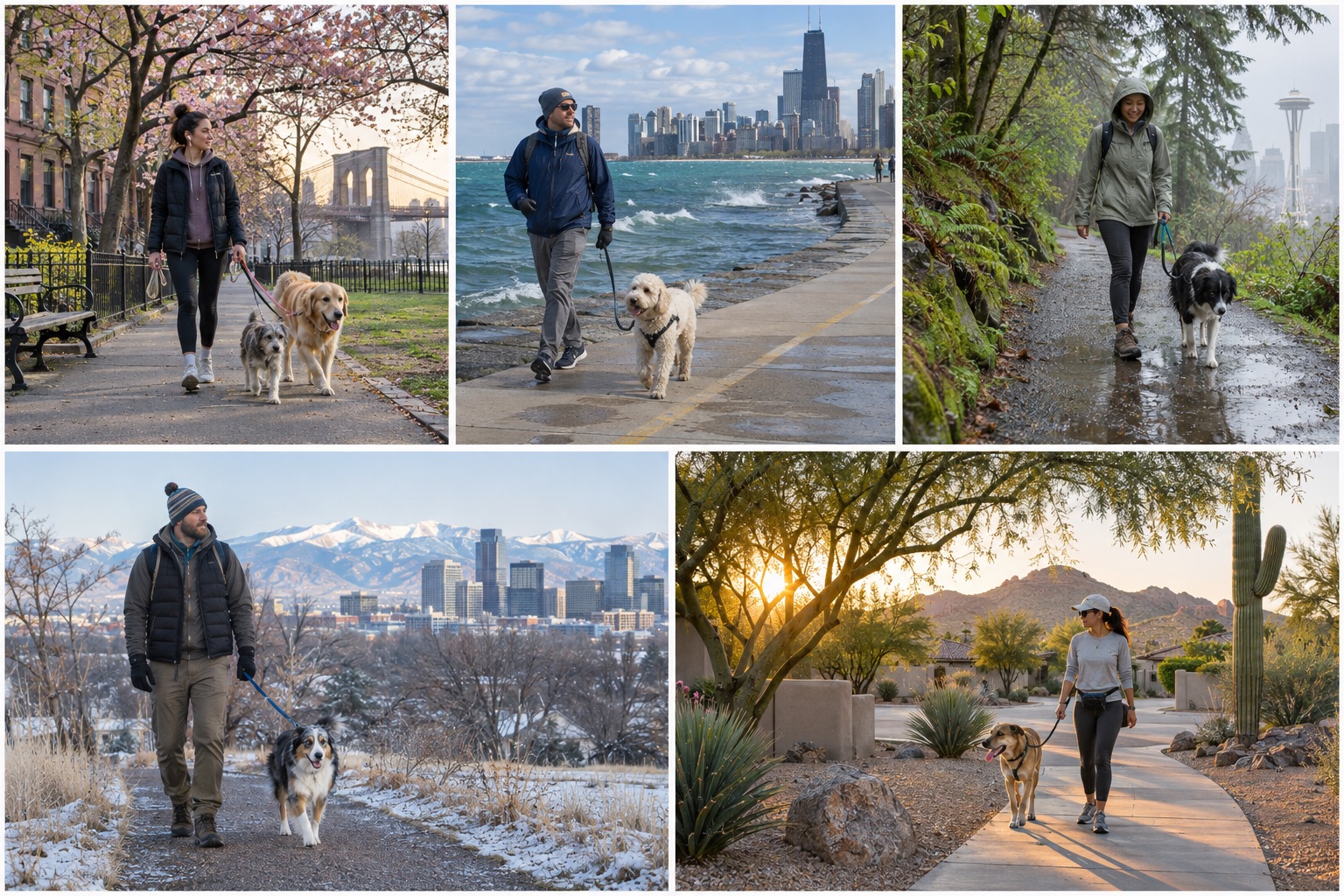
Check heat, humidity, and sun together
On warm days, read the temperature beside humidity, cloud cover, and sun exposure. Humid air can make it harder for people and animals to cool through evaporation, while direct sun can make an open sidewalk feel very different from a shaded street. The National Weather Service heat index combines air temperature and relative humidity to describe how hot it may feel for people in shade; it is useful context, but it is not a dog-specific medical threshold or a guarantee about a particular route.
Consider shifting an outing toward the cooler part of the day, using tree-lined streets, and keeping the first loop short enough to return easily. Bring water when appropriate, pause in shade, and avoid making a dog run beside a bicycle or stroller in hot conditions. If your dog appears distressed, unusually weak, confused, or uncoordinated, stop and seek veterinary advice promptly. Do not use a generic online chart to diagnose an emergency; your veterinarian can advise on your dog's risk factors.
Pavement can be hotter than the air
A weather app reports outdoor air conditions, not the surface temperature of asphalt, concrete, sand, or artificial turf. Sunlit surfaces absorb and retain heat; a shaded grass verge may be far more comfortable than a blacktop path a few feet away. The actual surface depends on material, shade, recent sun, wind, and moisture, so an air-temperature reading cannot tell you exactly how hot your dog's paws will feel.
Choose routes with grass, shade, or cooler natural surfaces when the day is warm, and favor the morning or evening if that works for your schedule. Avoid assuming that a brief hand test gives a precise safety measurement. Watch your dog's pace and willingness to continue, and change course if the surface or conditions seem uncomfortable. A short sniff walk on a shaded block can be a better choice than insisting on a long route just because the forecast number looks moderate.
Rain, wind, and cold call for different choices
Light rain is not automatically a reason to cancel, but it can reduce visibility, make sidewalks slick, and chill a small or thin-coated dog. Wind can increase discomfort in cold weather, especially during a long stop at a busy crossing. Check the hourly forecast for when precipitation is expected rather than relying only on a daily percentage. A brief shower during one period does not necessarily mean it will rain all day, and a lower rain chance does not promise a dry route.
For cold-weather walks, consider coat length, body size, age, health, and how quickly your dog usually gets cold. A practical route includes a nearby way home and a place to dry off afterward. In freezing conditions, follow local guidance about ice, road salt, and winter hazards. If your dog is shivering, lifting paws repeatedly, lagging, or trying to turn back, shorten the outing. Ask your veterinarian about special precautions for a dog with arthritis, heart or breathing problems, or a history of cold sensitivity.
Check air quality and official alerts
Smoke and pollution are not visible in every circumstance, so check the local Air Quality Index when wildfire smoke or a pollution advisory is possible. AirNow advises people to limit outdoor exercise when smoke is present or choose lower-intensity activity; pets also breathe the air along the route. A short essential bathroom break is different from a sustained brisk walk. When the air is smoky, consider indoor enrichment and check the local reading again later because smoke levels can shift during the day.
Look for active National Weather Service alerts before you go. Thunderstorms, flash flooding, extreme heat, winter storms, and high wind can change a familiar route quickly. If thunder is heard, move to a substantial enclosed building or hard-topped vehicle; open shelters and trees are not safe lightning refuges. Follow local officials, and never treat this guide or the site's activity planner as an emergency warning service. An official alert should override a routine walk plan.
Official sources and further reading
- National Weather Service heat safety
- American Veterinary Medical Association: Warm-weather pet safety
- AirNow: When Smoke Is in the Air
- National Weather Service lightning safety
Source pages can change. Check the issuing agency for current recommendations and local instructions.
Choose a U.S. ZIP code, activity, and day to compare hourly weather windows.
Open the outdoor weather planner