Outdoor Concert Weather Checklist: Heat, Storms, Wind, and Air Quality
Going to an outdoor concert in the U.S.? Check venue policies, hourly forecasts, heat, lightning alerts, wind, and AirNow conditions before you head out.
Weather changes by place and time. This guide is general information, not a safety rating, medical advice, or an official alert. Follow local authorities and the linked agencies for current conditions.
Check the venue plan as well as the forecast
An outdoor concert involves more than deciding whether it might rain. Check the venue's official policy for weather delays, shelter, re-entry, bag restrictions, accessibility, and event updates. The organizer knows which areas are open, where attendees should go, and how cancellations are announced. A forecast app cannot tell you whether a venue has a lightning plan or which shelter is available, so read the event's instructions before leaving home.
Check the NWS forecast for the venue location and the hours you expect to arrive, wait, and leave. A nearby city may not match a park or fairground outside the urban core. Review watches and warnings, precipitation, heat, wind, and active alerts. Recheck on the event day because conditions can change. If the organizer changes its plan or local authorities issue instructions, follow those official updates even if the weather at your home is calm.
Plan for heat, sun, and time spent standing
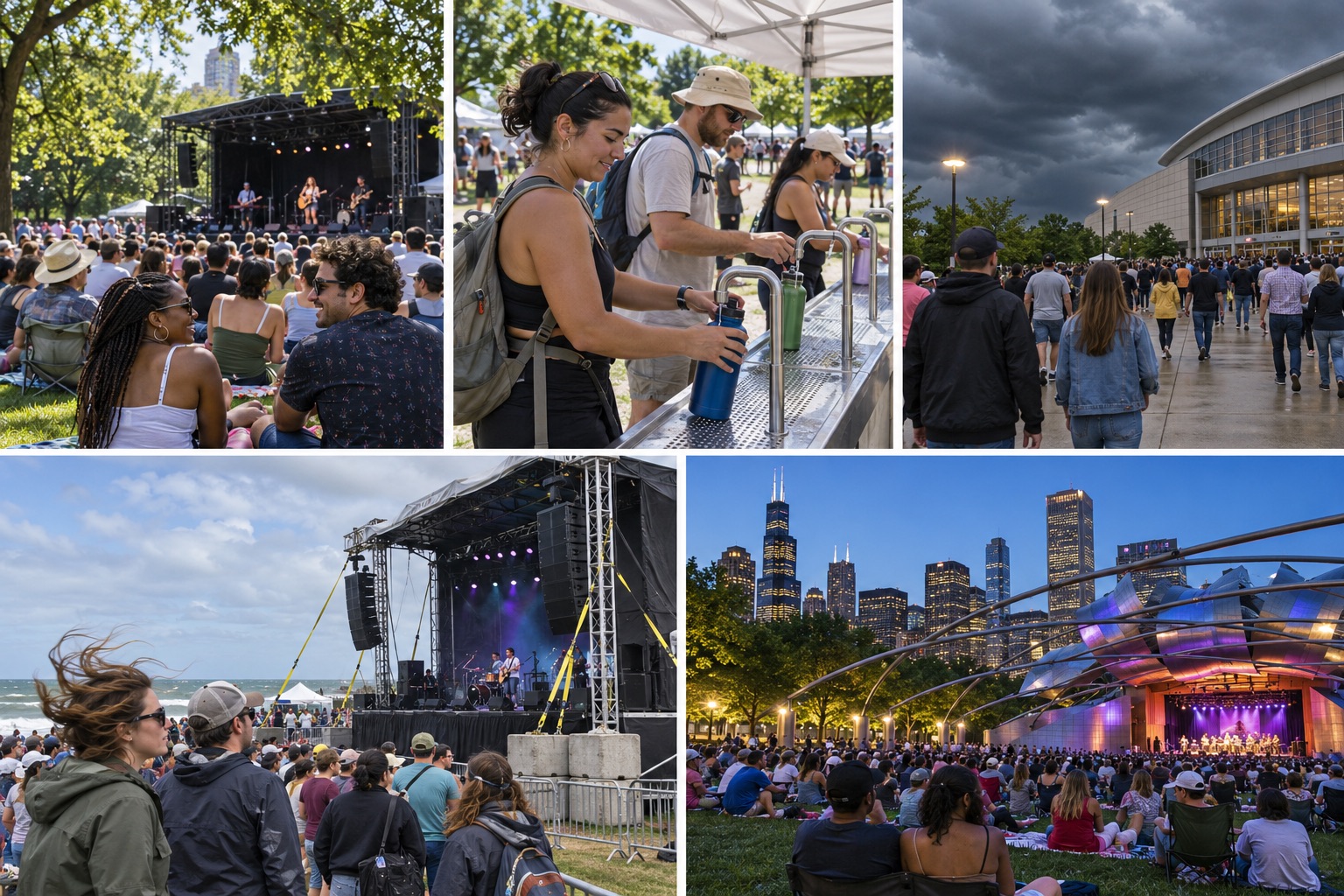
A concert audience may spend hours in direct sun or crowded conditions. The NWS heat index combines temperature and humidity for shaded conditions, while direct sun can increase heat exposure. Check local heat alerts, bring only permitted water, and find out whether the venue offers refill stations, shade, accessible cooling, or medical staff. Consider arriving earlier or later, taking breaks, and choosing a less exposed place if you feel unwell.
Follow venue rules and public health guidance, especially for children, older adults, and people with health conditions. Do not rely on a universal temperature cutoff to decide what is safe for every attendee. If heat warnings are active or you cannot access water and shade, consider skipping the event or leaving early. An event ticket does not obligate you to remain outdoors when conditions become uncomfortable or official guidance advises limiting exposure.
Thunder means stop and reach proper shelter
If thunder is heard, the National Weather Service advises moving to a substantial enclosed building or hard-topped vehicle. Open-sided stages, tents, pavilions, bleachers, and isolated trees do not provide safe lightning shelter. Follow the event's announcement and staff directions immediately. Do not wait at the stage to see whether the storm reaches you or delay moving while collecting every item. Identify exits and enclosed buildings before the show begins.
The NWS recommends waiting at least 30 minutes after the last thunder before resuming outdoor activity. Event organizers may use a more conservative policy or evacuate the venue; follow their instructions. Keep your group together at the designated meeting point and do not enter restricted areas. A weather app's rain probability or OutingCast's planner is not a lightning alert service and cannot tell you that a particular concert is safe to continue.
Wind, rain, and poor air can affect the event differently
Strong wind can affect temporary structures, banners, umbrellas, and exposed seating, while rain can make grass, steps, and walkways slippery. Follow venue notices about prohibited umbrellas and weather-related closures. Do not approach stages, scaffolding, or equipment during high-wind instructions. The organizer is responsible for venue-specific operations; official weather alerts and local emergency messages provide wider hazard information. If visibility or access worsens, follow staff direction rather than improvising a route through restricted areas.
Smoke can affect an event even when it is cool and dry. Check AirNow and local health notices if wildfire smoke or poor air quality is possible. AirNow advises limiting outdoor exercise or choosing lower-intensity activity when smoke is present; a concert is not exercise for every attendee, but it can mean prolonged outdoor exposure. People with health concerns should follow clinician and public health guidance and consider leaving or not attending when official recommendations call for reduced exposure.
Think about the trip home and late-night conditions
The forecast at showtime may differ from conditions after the encore. Check the temperature, wind, rain, and alerts for the time you expect to leave. Bring a layer if it may cool, plan a safe ride, and know whether transit or parking changes during a weather delay. If storms or heavy rain are expected, consider how you will get to shelter without crossing flood-prone roads or crowded areas. Never drive through flooded roads; follow local emergency and transportation guidance.
For a large event, agree on a meeting place in case cell service is congested and share your route home with your group. Keep your phone charged and monitor official venue messages. Leave calmly when staff direct attendees to do so. A general forecast cannot promise that the show will start, continue, or end on schedule. The venue's communications and local authorities are the sources for event operations, closures, and emergency instructions.
Official sources and further reading
- NWS Lightning Safety for Sports and Outdoor Events
- NWS Lightning Safety Overview
- NWS Heat Index
- AirNow: When Smoke Is in the Air
Source pages can change. Check the issuing agency for current recommendations and local instructions.
Choose a U.S. ZIP code, activity, and day to compare hourly weather windows.
Open the outdoor weather planner