How to Plan a Picnic Around the Weather Forecast
Choose a better picnic time and backup plan with an hourly U.S. forecast. Learn how to read rain chance, wind, heat, shade, thunderstorms, and air quality.
Weather changes by place and time. This guide is general information, not a safety rating, medical advice, or an official alert. Follow local authorities and the linked agencies for current conditions.
Start with a time window and a backup
A picnic plan works better when it includes a time range, not just a date. The forecast can shift between morning and afternoon, and a location can feel different in full sun, shade, near water, or under trees. Decide how long you hope to stay, when you could arrive, and what indoor or covered alternative is nearby. If you are organizing a group, choose a simple message for changing the plan so nobody feels pressure to stay outdoors when conditions turn.
Before choosing a park, check its rules, hours, reservation requirements, and any current closures from the park authority. Weather apps cannot tell you whether a table is available or whether a beach has a water-quality advisory. A forecast helps with timing and comfort; the local parks department and public health notices provide information about the place itself. Leave enough flexibility to change venues if the planned site becomes crowded, inaccessible, or affected by weather.
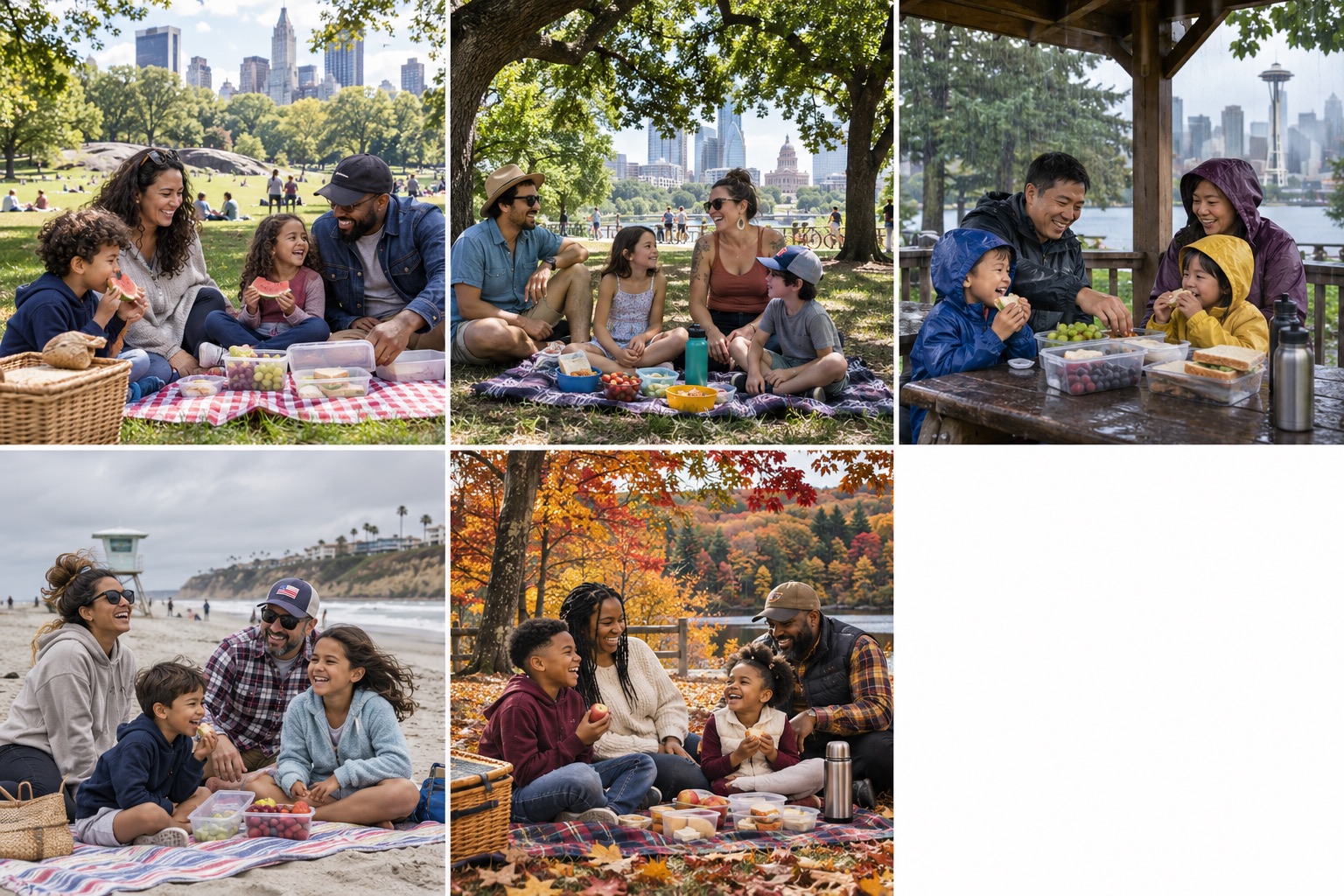
Read precipitation chance carefully
The National Weather Service describes probability of precipitation as the chance of measurable precipitation at a forecast point during a specified period. A 30 percent chance does not mean rain will last 30 percent of the afternoon, nor does it tell you exactly which minute a shower will pass. The daily number can also conceal a smaller window of higher probability. Look at the hourly forecast and the stated time periods before deciding whether to pack a shelter or move the picnic earlier.
Use radar as a current snapshot, not as a long-range guarantee. Showers can develop, weaken, or change direction, and radar estimates can differ from what reaches your exact picnic spot. A covered shelter can help with ordinary rain if it is open and permitted, but it is not a safe lightning shelter. For a fixed outdoor reservation, follow the venue's cancellation policy and official weather alerts rather than depending on a single probability number.
Wind can affect comfort and the setup
A breezy day may be pleasant near a warm city park and uncomfortable on an exposed beach or lakefront. Check sustained wind and gusts if you plan to use a tablecloth, lightweight plates, an umbrella, or a pop-up shade structure. Wind direction can bring smoke or blowing sand into an area and can make temperatures feel cooler. Tall buildings, hills, tree lines, and waterfronts can create local differences that a citywide forecast cannot show.
Choose a location with a stable, permitted setup and an easy way to pack up. Avoid securing anything to trees or park fixtures unless the site allows it, and never use a portable structure as storm shelter. If stronger winds are forecast, simplify the picnic rather than relying on an umbrella that may become difficult to control. Check park notices for wind closures or restrictions, especially on beaches, piers, and sites with large trees.
Plan around heat, shade, and direct sun
An air-temperature forecast does not tell you whether the picnic area is shaded or whether the sun will be overhead at your chosen hour. The NWS heat index combines temperature and humidity for people in shaded conditions, while direct sun can increase heat exposure. Nearby pavement, dark sand, and open lawns may feel much warmer than a shaded grove. Look for an accessible shaded spot, drinking water, restrooms, and a route back to a cooler indoor area.
On very hot or humid days, consider moving the gathering to the morning, shortening it, or choosing an indoor location. Bring water and plan breaks, especially for children, older adults, and anyone who may be sensitive to heat. Do not use a picnic planner or generic threshold as a medical assessment. Follow local heat advisories and public health guidance, and choose an indoor alternative if official recommendations call for limiting outdoor activity.
Thunderstorms change the plan immediately
Check for thunderstorm chances and active alerts before you leave, then keep an eye on the sky while you are outdoors. If you hear thunder, the National Weather Service says to go inside a substantial building or an enclosed hard-topped vehicle. There is no safe place outdoors during a thunderstorm. Open-sided picnic pavilions, tents, beach shelters, and isolated trees do not provide adequate lightning protection.
Wait at least 30 minutes after the last thunder before returning outside, according to NWS lightning guidance. If your picnic is near water, leave the beach or lakefront promptly and follow posted instructions. Do not delay while packing every item; people should move to shelter first. If a storm is expected and there is no reliable enclosed shelter nearby, reschedule or select an indoor venue rather than trying to find a small gap in the forecast.
Official sources and further reading
- NWS: Probability of Precipitation
- NWS Lightning Safety Overview
- NWS Heat Index
- AirNow: When Smoke Is in the Air
- FoodSafety.gov: Keep Food Cool for Summer Picnics
Source pages can change. Check the issuing agency for current recommendations and local instructions.
Choose a U.S. ZIP code, activity, and day to compare hourly weather windows.
Open the outdoor weather planner