Thunderstorm Safety for Hikers: When to Turn Back and Find Shelter
Plan a U.S. hike around thunderstorm forecasts. Learn why exposed ridges, trees, tents, and open shelters are unsafe and when to get to a substantial building or vehicle.
Weather changes by place and time. This guide is general information, not a safety rating, medical advice, or an official alert. Follow local authorities and the linked agencies for current conditions.
Make the decision before you reach exposed terrain
A hike can feel calm at the trailhead while a thunderstorm develops over nearby terrain. Mountains, ridges, canyons, coastlines, and open plains can all have fast-changing conditions. Check the National Weather Service forecast for the route and surrounding area, not only the nearest city. Review watches and warnings, expected storm timing, and the location of substantial buildings or enclosed vehicles. A tent, small restroom, or open picnic shelter should not be counted as safe lightning refuge.
Set a conservative turnaround point before the hike begins. If storms are expected during the time you would be exposed, choose another trail or postpone. If conditions look threatening or you hear thunder, stop the activity and move toward safe shelter; do not wait to see whether the storm gets closer. The NWS notes that thunderstorms can develop directly overhead and lightning may occur before rain reaches you. A forecast window is helpful, but it is not a promise that the route will remain storm-free.
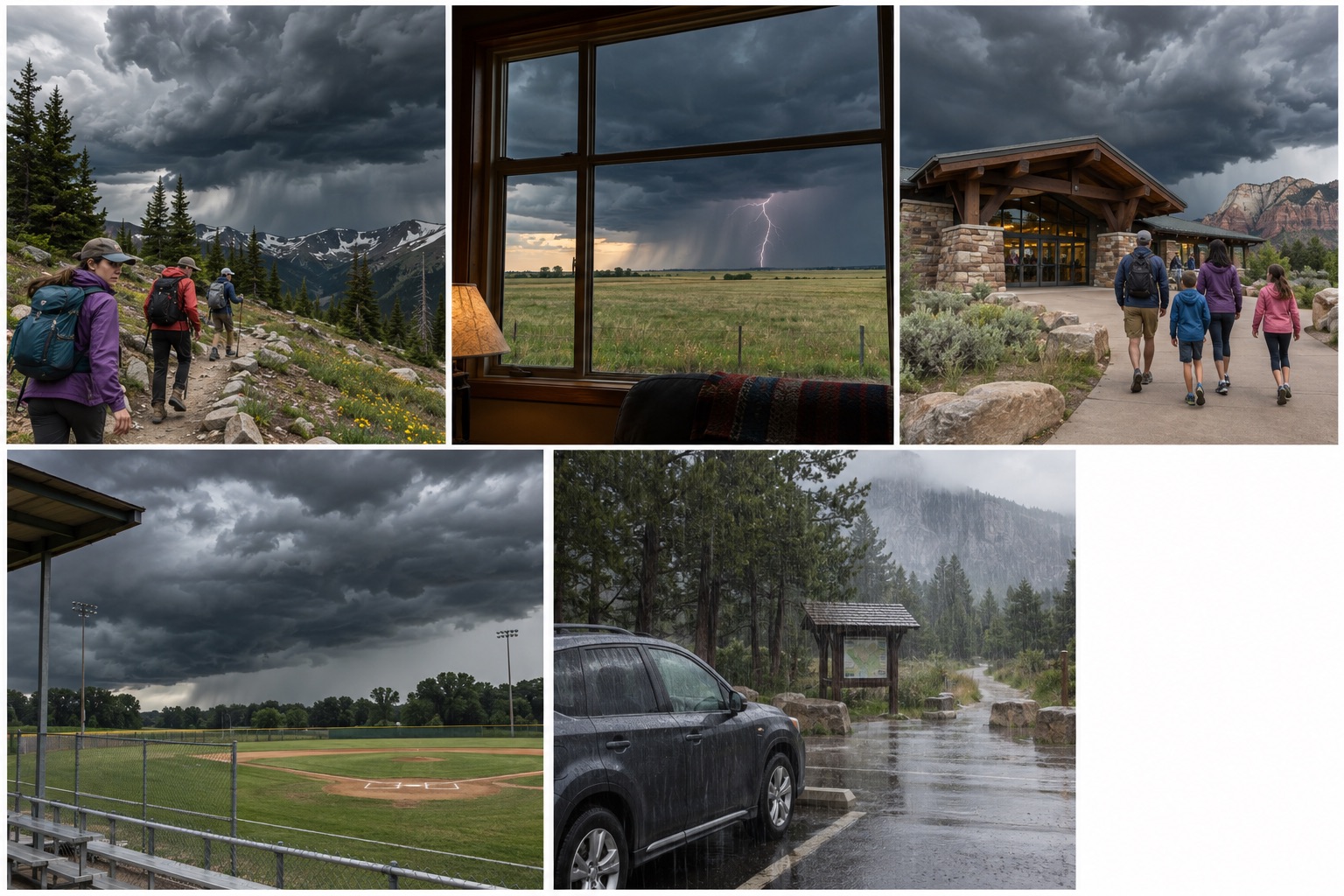
Know what counts as safer shelter
The National Weather Service recommends going to a substantial enclosed building or a hard-topped metal vehicle with the windows closed when thunder is heard. Buildings with wiring or plumbing, such as homes, offices, and visitor centers, offer protection. A vehicle with a solid metal roof is another option. A tent, open-sided pavilion, dugout, shed, isolated tree, rocky overhang, or porch does not provide the same protection from lightning.
Find shelter before you need it. On a remote trail, the nearest safe building may be far away, and a car can only help if it is reachable before conditions become dangerous. A trail map should include roads, visitor facilities, and exit points. If no safe shelter is available, the situation remains hazardous; outdoor posture advice is only a last resort and cannot make a location safe. The strongest planning choice is to avoid exposed terrain when storms are forecast.
Thunder means go indoors now
If you hear thunder, lightning is close enough to be a threat. Move immediately to the designated safe shelter rather than finishing a viewpoint photo, crossing a ridge, or packing slowly. Do not shelter beneath an isolated tree or lie flat on the ground. Move away from water, high ground, and objects that conduct electricity when you can do so without delaying access to a safer place. Follow park staff and local emergency instructions.
Once inside a building, stay away from windows and doors and avoid contact with corded electrical devices and plumbing during the storm. In a vehicle, remain inside with the windows closed. A vehicle is not a reason to drive through flooded roads or dangerous conditions. If the route to a building or vehicle is blocked, follow local emergency guidance and focus on reaching the safest available location. Call 911 if someone is injured or an immediate emergency exists.
Wait 30 minutes after the last thunder
A storm that seems to have passed can still pose a lightning threat. The NWS recommends waiting at least 30 minutes after the last thunder before resuming outdoor activities. If another rumble is heard, restart the waiting period. Use that time to check current official information and reassess the route. A blue patch of sky or a gap in rainfall does not confirm that lightning risk is over.
For hikers, the pause may change the trip plan. A summit objective, scheduled shuttle, or picnic reservation is not a reason to return early to an exposed trail. Consider the remaining daylight, trail conditions, and whether storms may redevelop. If safe return is uncertain, contact park staff or emergency services for direction. Do not use a general article, app notification, or personal weather sensor as a replacement for official warnings and instructions.
Understand watches, warnings, and forecast timing
A watch means conditions are favorable for a hazard in the affected area; a warning means the hazard is occurring or imminent according to the issuing authority. Exact wording and local procedures may vary, so read the current alert and follow the instructions it gives. Forecast periods are not exact arrival guarantees. Storms can speed up, slow down, split, or form in places where the sky looked calm earlier.
Use several sources for different tasks: the NWS forecast for official weather information, the local park or land manager for closures and trail conditions, and a reliable map for route exits. A consumer radar can help you see current precipitation, but it may not show every lightning threat or future storm. Cell reception can disappear in remote places. Download maps and the relevant safety information before you start, and tell someone your itinerary and expected return time.
Official sources and further reading
- NWS Lightning Safety Overview
- NWS Lightning Safety for Outdoor Activities
- NWS Lightning Safety for Sports
Source pages can change. Check the issuing agency for current recommendations and local instructions.
Choose a U.S. ZIP code, activity, and day to compare hourly weather windows.
Open the outdoor weather planner