Wildfire Smoke and Outdoor Exercise: Check Air Quality Before You Run
Use AirNow and local guidance to plan around wildfire smoke. Learn how AQI, activity intensity, duration, and indoor alternatives fit alongside a weather forecast.
Weather changes by place and time. This guide is general information, not a safety rating, medical advice, or an official alert. Follow local authorities and the linked agencies for current conditions.
Weather and air quality answer different questions
A pleasant temperature does not guarantee clean air. A weather forecast describes conditions such as temperature, wind, cloud cover, and precipitation; an air-quality report describes pollutants in the air. Wildfire smoke can travel far from the fire and can arrive when skies are otherwise calm. If smoke is possible, check the current Air Quality Index and public health guidance as well as the weather forecast. Look again close to the time you plan to go outside because conditions can change.
AirNow's Fire and Smoke Map provides current information for many U.S. communities, but readings and coverage can vary by location. A monitor is a snapshot for a place and time, not a promise about every street or trail. If you can see or smell smoke, do not ignore it just because a distant station reports a lower value. Follow official local updates, especially when a fire is active nearby or authorities issue an advisory.
What AQI can and cannot tell you
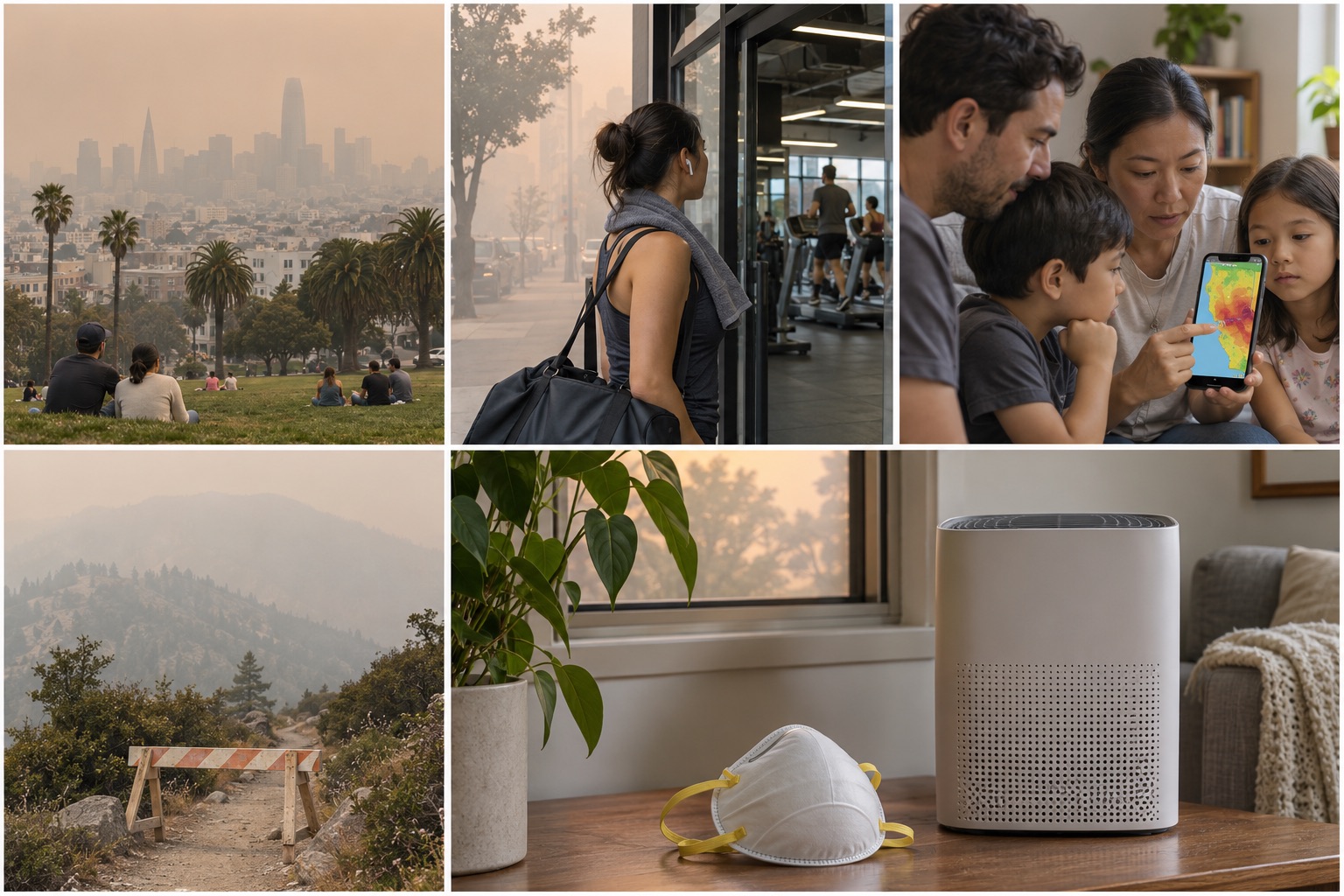
The AQI translates air pollution levels into categories intended to communicate health concern. Read the category, the specific pollutant when available, and the associated recommendations. AirNow's wildfire smoke guidance advises limiting outdoor exercise when it is smoky or choosing a lower-intensity activity to reduce smoke exposure. Different people may experience the same conditions differently, and people with asthma, heart or lung conditions, children, older adults, and pregnant people may need specific advice.
Do not treat one AQI number as individualized medical advice or an exact boundary between safe and unsafe for every person. Follow the current AirNow recommendation and any local health department instruction, then consider your activity's intensity and duration. A short walk near home, an interval workout, and a long trail run involve different exertion and exposure. If you have a health condition, ask your clinician how to follow public guidance for your circumstances.
Reduce the amount of outdoor exertion when smoke is present
AirNow recommends taking it easier when smoke is in the air, limiting outdoor exercise, or choosing lower-intensity activities. If a workout cannot be moved, reducing time outside or choosing a less strenuous option can lower the amount of smoke you breathe. The concentration, your breathing rate, and the duration all matter. A hard run makes you breathe more deeply and frequently than a quiet stroll, so rescheduling strenuous exercise can be a sensible choice during smoky periods.
If conditions are poor or you notice smoke, consider moving the workout indoors in a place with cleaner air, postponing it, or doing a gentle activity instead. Do not rely on the claim that a particular route is safe because it is near water or away from the visible plume. Smoke can drift and settle unevenly. Check official maps and alerts rather than trying to infer air quality solely from color, smell, or distance from a fire.
Check again later because smoke moves
Wildfire smoke levels may change during the day as winds shift, fires grow, or atmospheric conditions change. An AQI reading from yesterday or an earlier part of the morning can be out of date for an afternoon workout. Check AirNow or the current local source again before leaving and monitor any alerts. If authorities recommend staying indoors, follow that instruction rather than relying on a general forecast or an old screenshot.
The weather can affect where smoke travels, but wind direction alone does not tell you what concentration will reach a particular neighborhood. Terrain and distance also matter, and local monitoring can be sparse. Use official maps alongside public health notices. If you are traveling, check the destination and the route; conditions at home may differ from conditions near a trailhead, school, or outdoor event several miles away.
Masks and indoor air: follow public health guidance
AirNow notes that cloth masks do not protect against wildfire smoke and that N95 respirators can provide protection when worn correctly. A respirator does not make strenuous outdoor exercise risk-free, and fit and health factors matter. Follow AirNow and local public health guidance about respirators and outdoor exposure. People who have trouble breathing or who are not sure whether a respirator is appropriate should seek professional advice rather than relying on an article.
For indoor exercise, choose a space where the air is cleaner and cooler. AirNow's smoke guidance includes steps for keeping indoor air clean, such as reducing smoke entry and using appropriate filtration. Portable air cleaners and HVAC filters need to be selected and used according to manufacturer and public health instructions. If your home becomes hot while windows are closed, use local guidance to balance heat and smoke concerns; do not assume one measure solves both hazards.
Official sources and further reading
- AirNow: When Smoke Is in the Air
- AirNow Fire and Smoke Map
- NWS Heat Safety
- CDC Wildfire Smoke and Your Health
Source pages can change. Check the issuing agency for current recommendations and local instructions.
Choose a U.S. ZIP code, activity, and day to compare hourly weather windows.
Open the outdoor weather planner