Winter Road Trip Weather: How to Check a U.S. Route Before You Drive
Plan a winter road trip with route-specific forecasts, winter alerts, state 511 road reports, and a flexible backup plan for snow, ice, wind, and visibility.
Weather changes by place and time. This guide is general information, not a safety rating, medical advice, or an official alert. Follow local authorities and the linked agencies for current conditions.
Check the whole route, not just the departure city
A winter road trip may cross several climate zones, elevations, and forecast offices in one day. A sunny forecast at home does not describe a mountain pass, lake-effect snow belt, or exposed stretch of highway hundreds of miles away. Check conditions at your departure point, major stops, and destination, then look at the route between them. The National Weather Service forecast is organized by location and time, so compare the hours when you expect to be on each segment rather than relying on one city icon.
Build extra time into the plan. Snow bands can affect one corridor while nearby roads remain clear, and conditions may change during the drive. Choose alternate stops and a place where you could wait safely if a warning or closure develops. If the trip is optional and hazardous weather is expected, delaying departure can be the best route decision. A forecast is not a promise that roads will be passable or that a particular driving speed is appropriate.
Read watches, warnings, and advisories before leaving
Read the current National Weather Service alerts for the counties and mountain areas along your route. A winter storm warning, blizzard warning, ice storm warning, or other local alert may include instructions to avoid travel. Alert names and criteria vary by hazard and location; open the official alert text to see its area, timing, and recommended action. Do not use a low precipitation chance or a calm-looking departure sky to overrule an official warning for a later part of the route.
Check again before departure and during planned stops. Weather alerts can be issued, updated, or cancelled as forecasts change. If officials advise against travel, follow that instruction. If you must travel for an urgent reason, let someone know your route and expected arrival, keep your phone charged, and follow emergency guidance. A general article or a consumer planner cannot make a road safe, decide whether your vehicle is equipped for conditions, or replace state and local travel instructions.
Forecast snow does not tell you the road surface
Air temperature, precipitation type, pavement treatment, traffic, shade, and elevation all affect whether a road is wet, slushy, snow-covered, or icy. A weather forecast describes atmospheric conditions; it does not inspect every lane. Black ice can be difficult to see, and a road may freeze on bridges or shaded sections while nearby pavement looks wet. Check your state's 511 travel information service or department of transportation for road closures, surface reports, cameras, and chain requirements where available.
The National Weather Service winter-driving guidance recommends slowing down and driving carefully on snow or ice, allowing extra following distance, and avoiding travel during winter storms when possible. Clear snow and ice from windows, lights, mirrors, and the vehicle roof before driving. Keep headlights on when visibility is reduced and follow posted restrictions. These are broad precautions, not a substitute for local law, road authority instructions, or training in winter driving.
Wind, visibility, and lake-effect bands need their own check
Snow is only one winter travel concern. Blowing snow can reduce visibility and drift across a road, while strong crosswinds can affect high-profile vehicles and exposed bridges. Lake-effect snow may produce narrow bands with sharp changes over short distances. A route forecast and state road reports can help you see whether the segment you plan to cross is under a warning or closure, but conditions can change faster than a long-distance schedule allows.
If visibility becomes poor, road conditions deteriorate, or an official travel restriction is in effect, do not push forward just to keep a reservation. Use a safe, authorized place to stop and wait or choose an alternate route only when authorities indicate it is open. Never drive around a closure gate. A detour can lead into a less maintained road or another hazard area; follow the signs and official directions instead of a navigation app alone.
Prepare the vehicle and a stop plan
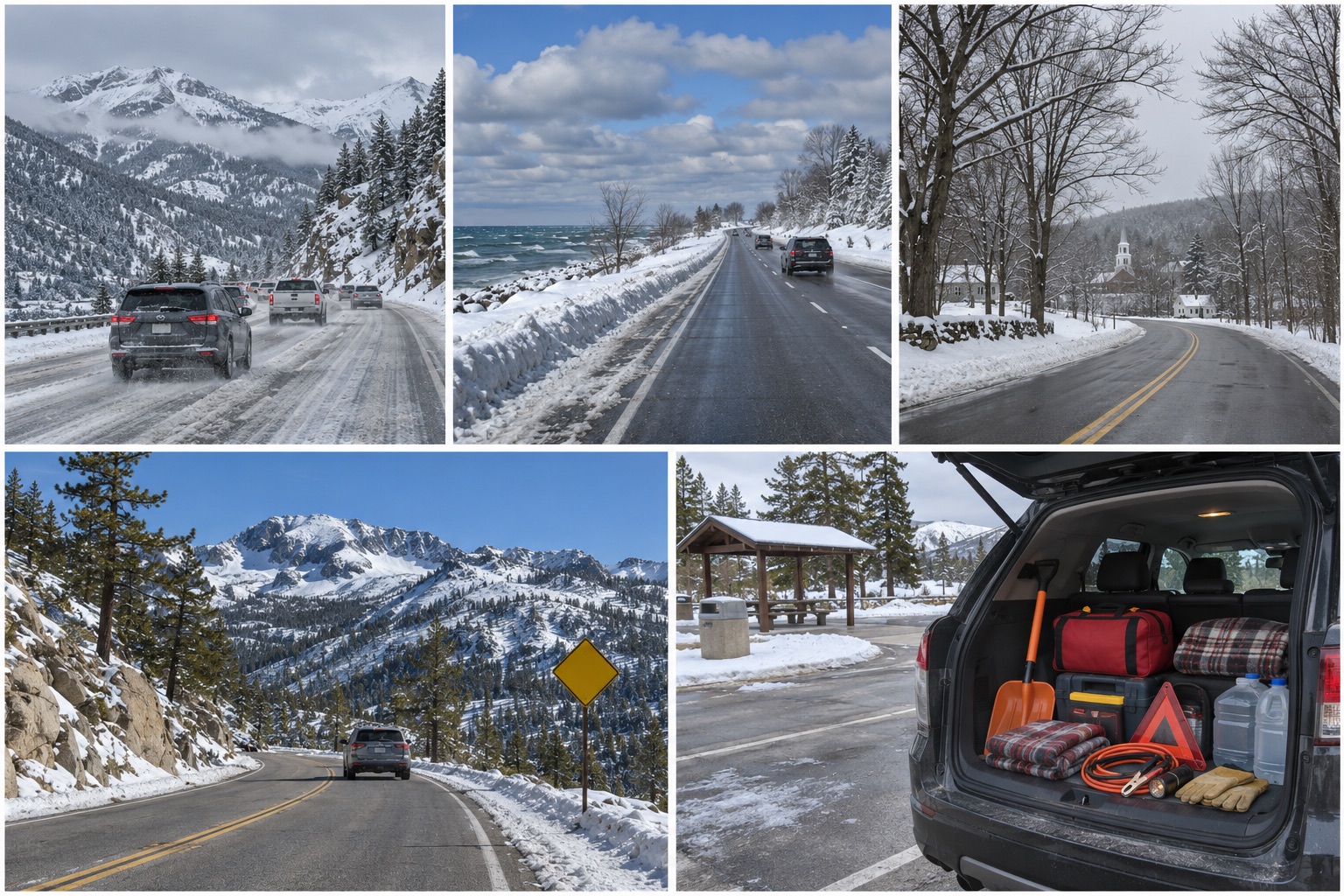
Before a winter drive, check the vehicle's tires, lights, wipers, washer fluid, fuel or charge, and any equipment recommended for your vehicle and route. Pack warm clothing, water, food, a flashlight, phone charging, and supplies appropriate to the trip. Review your owner's manual and local transportation guidance for chains or traction devices; requirements depend on the vehicle and jurisdiction. If you are driving through remote areas, identify staffed stops and charging or fuel locations before leaving.
Use the forecast to set a time to reassess rather than treating the itinerary as fixed. At a safe stop, check the NWS alerts, road authority reports, and expected weather for the next segment. Update someone if your arrival time changes. If roads are closed or officials advise staying put, follow their instructions. OutingCast can show selected U.S. ZIP forecasts and activity windows, but it does not provide road conditions, vehicle guidance, state 511 reports, or emergency travel clearance.
Official sources and further reading
- NWS Winter Weather Safety
- NWS Winter Driving Safety (PDF)
- Federal Highway Administration: Road Weather
Source pages can change. Check the issuing agency for current recommendations and local instructions.
Choose a U.S. ZIP code, activity, and day to compare hourly weather windows.
Open the outdoor weather planner